




 🖨️ Print post
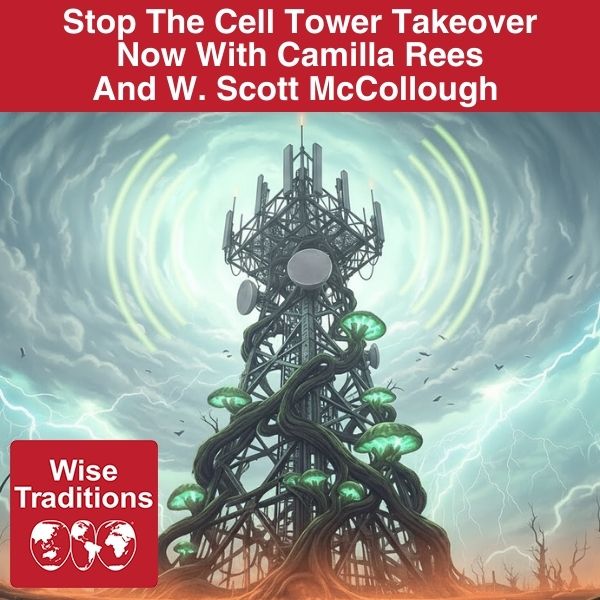
A cell tower might just pop up in your neighborhood without hearings or any kind of opportunity for local pushback or comment. This is the likely result of new proposed FCC rules that preempt all state and local authority over the siting, permitting and regulation of cell towers and antennas.
To be clear: No objections will be possible regarding the location, size, height, number of antennas, no need to prove there is a need for the antennas, no environmental reviews, no respect for aesthetic impacts, or historic districts, or scenic byways, etc. Towers and antennas will just appear outside one’s home, or one’s children’s schools, without notice, and there will be nothing one can do about it. The proposed rules even say local governments will not be allowed to hire outside experts to measure emissions from the antennas. All this is in the context of the industry’s stated plans for greater and greater ‘antenna densification’ with long-documented harmful radiation emitted by antennas placed every few hundred feet.
Guests Camilla Rees and W. Scott McCollough today explain the importance of taking action today to protect our freedom and our rights. They go over both the harms of emitted radiation and the urgency of the threat we’re facing.
The deadline for comments on the proposed rules is December 31, 2025. And the deadline for responses to comments is January 15, 2026.
Pertinent websites recommended by our guests for ACTION today:
704nomore.org – See the TAKE ACTION tab to make comments on the new proposed FCC rules, as well as on various bills moving through Congress that also seek to enable more wireless and limit local control.
Stop 5G.org offers resources and guidance to local communities wishing to resist cell towers.
Please become a member of the Weston A. Price Foundation at westonaprice.org and use the code pod10 to join for only $30 for the year.
—
Watch the episode here
Listen to the podcast here
Episode Transcript
Within the below transcript the bolded text is Hilda
The Telecom Act of 1996 included Section 704, which restricted local input on the regulation of cell towers and antennas on health or environmental grounds. It amounted to a federal power grab, limiting local control over the tech rollout in your neighborhood. Now, there are new proposed FCC rules that are aiming to strip away even our remaining state and local rights over towers and antennas. The result, you could very well walk outside on any given day to see a tower in your neighborhood without the opportunity to comment or oppose it on any grounds, not on its location, size, height, etc.
If passed, the proposed rules will strip away almost all state and local government rights over cell towers and antennas and force rapid approvals without community participation. The time to act is now, which is why we are releasing this bonus episode. Comments on the proposed FCC rules are due by December 31st, 2025, and further responses by January 15th, 2026.
Our guests are Camilla Rees, an award-winning health and environmental advocate and former Wall Street executive who now researches, writes, and advises on the biological and health risks of wireless and electromagnetic technologies, and Scott McCollough, the chief litigation counsel for Children’s Health Defense‘s electromagnetic radiation and wireless program.
They go over together exactly what’s at stake, the ill effects of emitted wireless radiation, the impingement of freedom and our rights with these new proposed regulations, and why the time is now to oppose the rollout of more towers and antennas. There is a deliberate antenna densification plan that the telecom industry is currently rolling out and stripping away local authority over towers and antennas, which leaves all of us vulnerable to its implementation. This is an all-hands-on-deck moment, so please tune in to this episode in its entirety and act swiftly.
—
Welcome to Wise Traditions, Camilla and Scott.
Hello, Hilda. It’s so nice to be here with you.
Hello, everyone.
Camilla And W. Scott’s Aha Moment In The Fight Against Radiation
I can’t wait to dive into this topic, but I want to start, Camilla, with your story, your a-ha moment when it comes to radiation.
I was never an activist, but I was very much focused on healthcare reform. When I was on the brink of finishing a book on healthcare reform, I found myself living in an apartment in San Francisco. I became injured by what turned out to be a neighbor’s wireless router on the other side of the wall from my pillow. I was dizzy. I couldn’t concentrate. I got hard irregularities lying on the bed. I lost my balance. At one time, I collapsed. Strange things were happening. I couldn’t concentrate well on my work. I finally got to the bottom of it. I realized you can’t talk about healthcare reform unless you know about this issue.
Scott, what got you into this?
It was far more mercenary. I’m an FCC lawyer. At least at the time, I was taking cases that others had developed at the FCC and other agencies and running them through the appeals court. One day, the phone rang. It said, “This is Children’s Health Defense. We got a case. We need a lawyer.” I said, “Send me a check. I’m in.” It turned out to be a challenge to the FCC’s 2019 decision to keep its current exposure guidelines.
When I came into it, since I had been actually teaching on this subject to engineers representing wireless companies, I went, “This stuff can’t hurt you.” I then read the record in the case and ultimately convinced the court that they should do the same thing. In that record were 11,000 pages of science saying, “This stuff can hurt you.” I became converted, realized everything I knew was wrong, and ever since, I’ve been representing Children’s Health Defense in this area.
Did the FCC change its exposure guidelines?
No. In 2021, the D.C. Circuit Court of Appeals ruled that the commission’s decision in 2019 to maintain its 1996 exposure guidelines had actually failed to engage in reasoned decision-making. That’s lawyer words for, “They didn’t do their job.” It reversed the decision, sent it back to the FCC, and told them to do more work on the subject, analyze it again, and come up with a better explanation for why it wanted to keep the guidelines. Four years later, the commission has yet to do what the court told it to do.
The ironic thing is, in their non-response to the court order, they have done the exact opposite, which is to push for more and more antennas, less local control, and more antenna densification. They want to get these antennas up every couple of hundred feet. Many of us feel that none of these proposals for bills in Congress that are proposing more wireless and less local control, and the FCC proposed rules that are up now, should be approved if they haven’t responded to the court order.
To be clear, the FCC hasn’t done its homework, its assignment that it was given. As a matter of fact, they’re moving in the opposite direction, trying to get more cell phone towers up. I’ve heard that parents are uprising. There’s a grassroots movement where people are like, “I don’t want this near my elementary school. I don’t want this near my park. I don’t want this near my home.” Scott, let me ask you. Why is it that we’re not having more success when it comes to pushing back against cell towers and extra antennas?
We are having success. We have an initiative called Stop 5G. We help local communities oppose cell towers that are proposed near residences and schools. We’ve actually been fairly successful. We’ve convinced many local jurisdictions that either the site is not needed, the tower is not needed, or it should be somewhere else. This is an industrial structure. It needs to be in an industrial area. We are meeting success. I’m convinced that this big push in Congress and at the FCC to take away local control is because we are getting traction.
Also, if I could say that going back to 1996, when the language in the Telecom Act of ‘96 took away local government’s rights to influence the siting of antennas and towers on health or environmental grounds. That was outrageous. That’s what 704 No More is trying to address. There’s that. There have been some other ways, like Scott says, to sometimes influence these towers with the overzoning, lack of demonstrated need, or whatever. The fundamental issue is so outrageous that towns have not been able to fight these on health or environmental grounds, even when people are getting sick when they’re in the beam of a cell tower. It’s disgraceful. People are being injured.
Towns have not been able to fight cell tower takeover on health or environmental grounds, leading to more people getting injured and sick.
Why The Proposed Regulations Are Just A Rubber-Stamp Process
The way the legislation was set up, you couldn’t give a health reason for not wanting the tower or an environmental reason, but you could give an aesthetic reason, or, as you said, demonstrate there’s no need. Apparently, the new proposed regulations will hinder our ability to fight these even more. Is that right, Scott?
Yes, it will turn local permitting into a rubber-stamp process. It will do so in several ways. One, it will minimize the amount of information that the local jurisdiction can require before deciding. Therefore, the other side, the wireless company, will be able to control what they see in here. It will very much shorten the period of time for them to decide, 60 days in some instances, from the time the application comes in. The local folks can’t get together, get organized, and present their case. They’re proposing to, in many ways, limit the sorts of things they can decide on.
For example, you mentioned aesthetics a minute ago. One of the things that they are thinking about doing in this rulemaking at the FCC very much limit their aesthetic discretion by saying, “You can’t impose this aesthetic requirement, or your only option to do aesthetics is what we call stealth. You make it look like a Christmas tree, a bell, a windmill, a palm tree, or whatever. You can’t say, ‘No, it can’t be higher than 80 feet.’” They’re very much limiting what a local jurisdiction can do. Finally, and most importantly, they are functionally eliminating the ability of the local jurisdiction to say, “You don’t need this.” They’re going to take that away.
We’re totally losing local power. What we should have is an HOA in place because they would be more strict than the FCC about what’s allowed. HOAs won’t even let you have chickens in your backyard sometimes or plant food in your front yard because it doesn’t look right. They seem more into strict regulations about appearances than it sounds like the FCC seems to be.
That is true. A homeowner’s association can impose some things that a local jurisdiction cannot. What we’re seeing out there, the great preponderance of these, is what we call small cells, smaller than 50 feet. They’re usually right there with telephone or electric poles. Most of those are in rights of way. Even if you’re in a homeowner’s association, it’ll still be in a municipal right-of-way. Therefore, these zoning rules would apply.
I was saying that tongue in cheek, Scott, but I see that even HOAs and all of us are being overridden and almost stampeded by these new regulations. What is the likelihood of these regulations passing?
The sense I get is that there is a majority on the commission that wants to do this if they can. They need to be convinced otherwise.
The Negative Effect Of Cell Tower Radiation To Our Health
What about the science? Let’s go back there for a second. You were saying there was a preponderance of evidence, Scott, that convinced you, “This is something that matters more than I realized and is actually having ill effects.” What evidence is there that this radiation from these towers and antennas is affecting our health in a negative way?
Let me take that for a minute, Camilla, and then I’m going to hand it off to you because I think you’re going to have a slightly different take. What I saw in 2020 was evidence that had been put in at the commission between 2013 and 2019. It was thousands and thousands of studies, all of which showed that the basic premise behind the commission’s guidelines had no biological basis.
The prevailing theory under these rules is that radiofrequency radiation cannot harm you unless it burns your skin. It’s a so-called thermal effect. I had been taught that. I had been teaching that to engineers for many years, that this stuff can’t harm you unless it burns your skin. It turns out that the premise is simply not so. There are many reasons for that. They’ve been hidden away from the people for many years. Camilla, now you can tell us how the government has known for so long that that’s simply not true.
The US government has known, going back over 50 years, for over half a century. They have published studies. I have read these studies. In 1971, a study by the US Navy based on science from 1940 or 1950 until 1971 showed extraordinary biological effects throughout the body, central nervous system effects, cardiovascular effects, cancer, cognitive difficulties, and genetic damage. After that, there were two studies by NASA, a study by the Defense Intelligence Agency, the US Army, the US Air Force, and two studies affiliated with the NIH.
We can’t say that the government hasn’t known this. They knew this, and they have enabled a trillion-dollar industry to emerge and to become fully integrated with our economy, knowing full well that it’s harmful to people in many different ways. It stresses cells. It stresses the systems in the body. It affects organs. It affects DNA. It affects the baby in utero. When the baby is exposed in utero, it affects their life after birth. There’s a tremendous amount of science.
We have about ten different types of cancers that have now been associated with this radiation, such as brain cancer or glioma, meningioma, tumors of the lining of the meninges, schwannoma tumors of the heart, parotid gland tumors, cancers of the eye, thyroid gland cancers, breast cancer, melanoma, leukemia, and lymphoma. It’s a complex thing to reduce it to one statement about cancer because there are different kinds of frequencies. There are different kinds of cancers. There are different kinds of preexisting conditions people might have. The evidence is pointing in the direction that, going back over 50 years, there’s a risk of cancer.
Why The US Government Enables The Cell Tower Takeover
Why would the government enable this, as you said, the cell phone tower takeover? Why would they enable this industry to proliferate as it has if they’re aware that it’s so damaging?
It’s especially important because there is an alternative, that fiber to the premises. It’s safer, more secure, faster, and doesn’t have any of these risks. It’s more energy efficient. There is an alternative that, for the majority of uses, we should be using, and we should have installed to a greater degree than we have. The US is lagging behind other countries in its use of fiber to the premises. Some countries, like the United Arab Emirates, have almost 100% fiber to the premises. There is South Korea. I could go on and on. The United States is below. It’s roughly 50%, give or take.

Scott, maybe you could explain the economic difference between how easy it is to put in wireless. They’ve got planned obsolescence built into this equipment. They keep selling equipment. Fiber is enduring. You put it in for the long run, and it’s done. It’s more economically attractive for a business. These are public companies. It’s more attractive. It’s also highly government subsidized. The business model is based on planned obsolescence and very rich government subsidies. That’s the way I see it. What about you, Scott?
One of the main drivers is the military. The military, for many years, relatively soon after World War Two, was using radar and sonar. It was that technological edge that very much contributed to us winning the war. They decided that using wireless would be major for military and other strategic reasons. They wanted to deploy it in advance of technology. It was deemed to be in the national interest. The other reason is called regulatory capture. Big Tech and the telecoms have always had great influence, far more so at the federal level than at the state and local level.
Big campaign checks, they speak loudly. The people’s interest, and even their health interest, has become secondary to the so-called national interest. This is not a new thing. Other industries have controlled the way our government operates, the decisions that it’s made. That is probably it. It’s capture, plus the perceived strategic importance of it in terms of our national and international stature and ability to continue to dominate.
Big campaign checks speak so loudly that the people’s interest become secondary to the so-called national interest.
Why Smaller Antennas Are Actually More Dangerous
Let’s go back to the health thing for a minute. You said more small antennas are being put up. Are those less dangerous for our health?
No, they are at least as dangerous in some ways and even more dangerous than others. The main thing about a small cell is that it will be much closer to you. In the old days with the old cellular technology, and everybody will remember this, you would have these tall towers, hundreds of feet tall, but they were far away. The signal could reach out 10 to 12 miles sometimes. Now, they have these small cells, but their effective reach, depending on which frequencies are used, is going to be anywhere from only 750 to 1,000 feet or up to about 2 miles. They are closer to people. Remember, in this stuff, distance is your friend.
Anything wireless, the impact of it falls away logarithmically. In other words, the further away you go, it falls off a shelf. If you’re relatively close to it, it’s magnified greatly. The other impact of small cells is that they are using additional frequencies. Many people associate 5G with just it, but it’s these millimeter waves. They have relatively short distances where they effectively communicate to broadcast high bandwidth data, about 750 feet to 1,000 feet. They’re also very powerful. You’re getting much more energy directed at you.
Plus, finally, and I’m almost done, I use this from an engineer’s perspective. I look at this stuff, and it makes a propeller on the top of my head spin. It is exquisite technology. There’s no getting around it, but it uses very complicated algorithms to engage in what we call modulation and pulsation. In other words, it’s an on-off type thing, and then also strength going up and down, but it goes fast. What science is telling us now is that it’s the energy, but it is also the way that it is switched on and off and dialed up and down that hits everybody hard.
Some of the latest science is showing that the modulation in particular reaches down all the way down to the cellular level and interferes with our own internal signaling processes. Many people don’t realize that we are electric beings, too. We evolve naturally using sunlight, which is a form of radiation, but this is artificial radiation. It uses many different frequencies. The modulation and pulsation are something our bodies have never seen.
We have not evolved to deal with it yet. That is why it does things like break down DNA. That is why it causes many other kinds of issues. It even affects things like biomes in the soil. Some studies have indicated that it increases antibiotic resistance in the soil. People who are doing things like regenerative farming are discovering that if they’re close to a cell tower, they’re having a harder time because of the effect on the biomes in the soil.
These small cells are generating different kinds of wavelengths, which are damaging our health and the health of the soil, and even breaking down DNA. We’re closer to them. I imagine they’re even more than they ever were before.
Yes, because they are using many different frequencies all at the same time at different energy levels using several different modulation and pulsation techniques.
How To Minimize Radiation Exposure From Cell Towers
Let’s say I live near a bunch of antennas and towers, which I imagine many of us do, but I don’t have any particular illnesses showing. How else are people’s lives impacted in ways they may not perceive at first?
I coauthored a paper in February that was called The Safety of Wireless Technologies: The Scientific View, in which we connected today’s fastest-growing chronic illnesses with electromagnetic fields based on the Navy report that I mentioned in 1971. A lot of people have illnesses, but they’re not connecting them with electromagnetic fields, things like type 2 diabetes, cardiovascular problems, immune system problems, autoimmune problems, and fertility. Fertility is plummeting.
There are so many different chronic illnesses, 23, that we listed and were in the Navy report as being connected. That Navy report in ‘71 essentially forewarned about what has become today’s chronic illness crisis. You may not be connecting the dots, but many conditions are being impacted by these fields and can be improved by removing yourself from the exposures.
Let’s go there next. How can we minimize exposure apart from moving altogether to someplace completely off-grid?
I like to break down the answer to that into two tracks, equally important. One is that you have to look out for yourself. You have to learn what the exposures are. You’ve got to be able to measure. If you suspect there is a problem, you measure, minimize to whatever degree you can, and hardwire your computer equipment. Don’t have your cell phone near your bedside. Many different things. There’s a lot of information out there about what people can do.
The second piece of how you protect yourself is that we must all get involved with the societal issue that we’re dealing with, because even if you protect yourself, nothing is going to change in our world unless we address things like Section 704 of the Telecom Act, these new FCC proposed rules, and other bills coming through Congress right now. We all have to get activated. Otherwise, you can sit there and protect yourself, but the world is getting more and more dangerous.
Can I supplement that quickly? I do apologize.
Yes, please.
One thing people should be doing is using wired headsets. Don’t use Bluetooth headsets. Keep your phone in airplane mode a lot more, especially at night. Try not to use Wi-Fi. Instead, use wired connections. If you must use Wi-Fi, put it in a part of the house where you don’t go, and certainly your children don’t go. Don’t put it in your children’s bedroom. Turn it off at night. Minimize the number of other things that have radios in them. Almost every child’s toy these days has one. Your car has about twenty. Your refrigerator has one. Your washing machine has one. Each of your TVs has one. Find out how to turn that off, at least at certain times.
The most important time that you can have is during your sleep cycle. Try to minimize exposure as much as you can during your sleep cycle. I will follow up on one more thing. People aren’t connecting the dots, but if they’re having difficulty concentrating, if they’re having difficulty sleeping, or if they’re starting to have behavioral problems with their children that they cannot otherwise explain, they need to look at wireless as a potential culprit.
Let me just mention also in terms of wire, there’s an intermediate between a hardwiring and a wireless router. I advocate for hardwiring everything. For people who feel they need wireless, there’s a router called the JRS Eco Router made in the Netherlands that is an on-demand-only device. Unless you’re calling for it, it is not transmitting, meaning it’s not transmitting overnight. During the day, when it is transmitting, it’s about 90% lower power. It is a very good option for people who feel they need to have wireless at times. Again, hardwiring is the best.
All About The 704 No More Initiative
Wonderful advice to personally protect ourselves and minimize our exposure. Let’s talk about the activist piece. Let’s talk about Section 704, which is part of the Telecom Act. I know Children’s Health Defense has an initiative called 704 No More. Tell us a little bit about that, Scott.
704 No More, as Camilla mentioned, refers to a portion of the 1996 bill that very much restricted, for the first time, local jurisdictions’ authority. It put some more general language in. Many of these weren’t that bad, but two parts in particular were. One, we’ve mentioned, it prohibits local jurisdictions from regulating emissions or exposures if the exposures are consistent with the FCC’s rules, the ones that we talked about from 1996, which make no sense. Local jurisdictions cannot say no to a tower even if they think it might hurt somebody. The other thing that was problematic was that it imposed this idea of a limit on the amount of time that could be taken.
The statute says a reasonable amount of time. In the legislative history, they said, “We don’t want these things to take forever. We don’t mean for all these local jurisdictions to change how they do it. You can’t always keep the wireless companies at the back of the line.” The FCC, however, later came in and imposed what it calls shot clocks, which do put an absolute deadline on how long it can take. It had the effect of, “Don’t keep the wireless companies at the back of the line forever to put them at the front of the line forever and always.”
Give them a fast pass.
It is still possible to meet the current shot clock deadlines, but the commission is currently thinking about making them much shorter and imposing a so-called deemed approved remedy if you don’t make a decision by the end of the shot clock period. Let’s assume it’s a 60-day period. Application comes in. If the local jurisdiction takes longer than 60 days, it’s stamped approved.
This reminds me of the FDA rule that is generally regarded as safe. I don’t think it’s legislation, but regulation. The idea is that if it’s generally regarded as safe, they’ll let it be in our food stream with impunity. Anything goes, as long as it’s generally regarded as safe. It sounds like this is a rubber stamp in effect as well.
It is a rubber stamp. What the commission is all about, and what many of the bills in Congress would do, is turn local zoning into a complete farce. It will preordain the outcome. When a cell tower goes up next door to somebody, and they get mad, who are they going to call? They’re going to call their city council member. The council member is going to go, “They told us we had to do it this way. We had no choice.” All the accountability will stay at the local level, but it’s not their fault. It will be the fault of the people in Washington, DC. We need to let our people in DC know we don’t appreciate this very much.
Let’s talk about how we can do that. How can we let them know? I understand that this is a very urgent matter. I’m hoping we can get this out before the comment period and the response to the comment period closes. Talk to us about what’s going on right now.
If you go to 704 No More, there’s a button that says “Take Action.” That will take you to different places where you can take action, whether we’re talking about the FCC rules or the seven bills in Congress now that are also looking to enable more and more wireless and take away more local control. There’s a form there where you can encourage your local community to also connect with members of Congress. We need to be flooding Congress with opposition. That’s an easy way to do it. Just go to the take action tab on 704 No More.
That’s fabulous. I’m thinking right now, there has been an uproar in my community of folks who are against this pesticide liability shield that is going through Congress. This is more invisible and just as important to protect our family’s health. Thank you for bringing that to our attention. Do you have anything to add to that, Scott?
I do. 704 No More also has a litigation aspect to it. One of the things we will be going at is challenging the constitutionality of the federal legislation that says local jurisdictions cannot say no if they think it’ll hurt somebody. The second piece of it is a constitutional challenge to the liability shield that the telecoms have right now, because if they emit and have exposures that are within the FCC guidelines, and it makes you sick, you can’t sue them right now. They are immune. We’re going to challenge the immunity. We’re also going to challenge the statute, saying that both are unconstitutional.
Making A Change For The Next Generation
Scott, do you ever run into people who think like you used to think? “This is great. I want faster downloads. Anybody who is against these cell towers and antennas going up is a Luddite who doesn’t care about progress.” Do you ever run into people like that? If so, what do you tell them?
I run into it all the time. Those few in the telecom industry that still deign to speak to me remain unconvinced. To be charitable, one explanation is that they have done this to themselves and to their children. They don’t want to admit that, for whatever reason, they have wreaked such havoc on our society. They refuse to believe. They insist on staying in this alternate reality. For the rest, they’re corrupt, and they don’t care. They got their money, and they’ll spend it after they die of cancer.
People who refuse to believe the dangers of cell towers wreak havoc on society.
We’re collateral damage. They look at it like military collateral damage, necessary injuries for their greater objective. Scott mentioned the FCC is captured by the industry. The Safra Center for Ethics at Harvard, many years ago, wrote a report called Captured Agency about this situation. This is exactly what is happening now. In that report, it said that, again and again, Congress and the FCC have extended the wireless industry carte blanche to build out infrastructure, no matter what the consequences to local communities.
Here we are many years later. They’re doing it again. They’ve got to be stopped. We need to start exercising our right to the democratic process, get engaged, call our representatives in government, bring people together, and form local groups. There are already many groups. We’ve got over 100 health and environmental groups that are joining together with us to endorse this new effort to reverse Section 704 of the Telecom Act and also to restore the individual rights that were taken away.
It is because many courts have decided that when people have had injuries, whether health injuries, environmental, real estate devaluation, injuries to their livestock, moving costs, or whatever, this is a conflict preempted, so you can’t get compensation. The industry is shielded from liability in this way, too. We’ve got to make it so that they feel the sting of liability because that can change things.
W. Scott And Camilla’s Tips To Improve Your Health
I’m so thankful that you all are waking us up to this insidious situation of cell towers cropping up all around us. Our city officials, as you were saying, Scott, are raising their hands and being like, “Nothing we can do.” We will definitely put links so that people can get active, join hands with you, and let our voices and our desires be known to protect our health and the health of future generations, the livestock, the land, and all the things you were talking about as well. As our time comes to a close, I want to pose to both of you the question I love to pose at the end of the show. If the audience could only do one thing to improve their health, because we focus a lot on generational health here, what would you recommend that they do? Let’s start with Camilla.
I believe it would be at the level of awareness and consciousness to understand our bodies as living systems, that we are alive, that nature is alive, and that we’re in a living universe. Instead of thinking that we’re these hard bodies and this affects these things, whether it’s a chemical or EMF, it’s not going to affect us. It does. It affects the regulatory systems in our body. Starting there with awareness would be very helpful.
Scott, what do you think?
Awareness is key because then you get into informed consent. An adult who is informed of a risk and chooses to take that risk, nonetheless, as far as I’m concerned, is free to do that. The problem that we have here is that a lot of these exposures are involuntary, nor are people informed. You don’t have informed consent, but let’s get past that. We’re all adults. The most important thing is that we be mindful of the very particular effects and risks that there are for children who are not of an age to be adequately informed or to exercise informed consent.
You can take all the risks that you want as an adult, but you need to be paying attention to what this is doing to our children. It’s not just the health effects of the RF either. We’re seeing what this infrastructure facilitates, too, in terms of the impacts on teenagers in particular, and especially young girls, the social media impacts, and then the screen time. This stuff is bad for young humans. We need to be mindful of that. As adults, we can take the risk. We can say, “Yes, that’s okay,” but we need to take care of the children.
If I could just add one other thing, Hilda, we also need to be aware of the potential for surveillance with all these antennas and with more antennas and more data collection, more analyzing us, profiling us, and influencing us. It’s as scary as the biological effects, what could happen, and what is happening.
I’ve got an hour presentation on this. I’ll try to boil it down to two minutes. People have heard about the fifteen-minute cities or the ten-minute cities. People have heard about digital money and digital ID. Guess what infrastructure supports all of that? It is the wireless network. One of the other reasons, and it gets back to what I said earlier about the national interest, is the surveillance state that is coming on us. This infrastructure is what implements it. These things are little spy bots.
If you’ve got a cell phone, it’s telling on you all the time. They know where you are going. They’re capturing this information every minute. They know who you’re talking to. They know what you are doing online. It is being logged. It is being stored, and it will be used against you. The threats to liberty are almost as bad as the threats to health and our children. If you are interested in individual liberty, freedom of choice, freedom of movement, the right to make your own decisions about yourself, and how you conduct your life, you need to be worried about this technology because it will be used to take all of those things that you cherish away from you.
The threats to liberty are almost as bad as the threats to health and our children.
Scott, thank you for raising our awareness on that front. We may have to do another episode with you talking about that. It is important. Thank you to both of you. On behalf of the Weston A. Price Foundation, this has been a very important conversation.
Thank you very much, Hilda.
—
Our guests were Camilla Rees and Scott McCollough. They recommend visiting the site 704 No More. See the Take Action tab to make comments on the new proposed FCC rules, as well as on various bills moving through Congress that also seek to enable more wireless and limit local control. 704 No More is a collaborative effort initiated by Children’s Health Defense, supported by over 100 health and environmental advocacy organizations. Follow the Take Action tab and support this effort in any and all ways possible.
Another website of interest is Stop 5G. It offers resources and guidance to local communities wishing to resist cell towers. If you find any of this information valuable, please consider becoming a member of the Weston A. Price Foundation. Use the code pod10 to join for only $30 for the year. Thank you so much for tuning in, my friends. Stay well and remember to keep your feet on the ground and your face to the sun.
About Camilla Rees
Camilla Rees, MBA is an award-winning health and environmental activist, and a former Wall Street executive who has more recently been a researcher, author, and producer on technology risks focused on biological and health risks from electromagnetic fields.She has studied widely in medical, scientific, complementary and alternative medicine, health enhancement and self-empowerment fields for thirty years and also serves as a personal and business consultant to change agents, using her Wide Angle Health framework.Camilla founded Manhattan Neighbors for Safer Telecommunications, ElectromagneticHealth.org, Campaign for Radiation Free Schools and co-founded the International EMF Alliance, in Oslo, Norway. She is Senior Policy Advisor to the National Institute for Science, Law & Public Policy in Washington, D.C., where she has overseen policy papers on electromagnetic fields, the smart grid and telecommunications.
In 2025, Camilla co-authored a paper, “Safety of Wireless Technologies–The Scientific View”, which explained that unheeded warnings in a U.S. Naval Medical Research Institute review study in 1971 significantly contributed to the explosion in chronic illnesses in the U.S. since 1990. Today, Camilla is co-leading a collaborative initiative, called 704 No MoreTM, comprised of 100+ health and environmental advocacy groups aimed at dismantling Section 704 of the Telecommunications Act of 1996, which took away state and local rights to influence the siting of cell towers and antennas on health and environmental grounds. Initiated by Children’s Health Defense, the effort is also focused on restoring Constitutional rights to legal recourse for parties injured by antenna infrastructure, and also focused on new proposed FCC rules and legislation seeking to further enable cell towers and antennas and restrict state and local authority over this infrastructure.
About W. Scott McCollough
W. Scott McCollough is the Principal at McCollough Law Firm PC and he serves as chief litigation counsel for Children’s Health Defense’s Electromagnetic Radiation (EMR) & Wireless Program that aims at addressing the uncontrolled rollout of wireless infrastructure, including 5G cell towers, without regard to human and environmental health. In this capacity, Scott is representing NJ communities and has been successfully litigating cases against the FCC, Verizon, and local zoning authorities that are failing to protect their communities from the harms of RF radiation.
Scott’s legal career spans over 40 years in telecommunications, Internet regulation, utility law, privacy, and free speech litigation before federal and state courts and commissions. He has held various positions in law firms, including shareowner and partner roles, and served as a contract consumer advocate for the City of Austin Electric Utility from 1994 to 1999, as well as regulatory counsel for the Texas ISDN Users Group and the Texas Internet Service Providers Association.
Important Links
- Camilla Rees
- Children’s Health Defense
- W. Scott McCollough on LinkedIn
- Stop 5G
- 704 No More
- JRS Eco Router
- Weston A. Price Foundation

Leave a Reply